Thursday, 6 June 2013

The economic viability of investing in a franchise

The popularity of franchising is constantly increasing.

It seems that the popularity of franchising is constantly increasing and delving into the economic viability of investing in a franchise, when compared to that of investing in a new business, it is not very difficult to understand why.

“The most significant advantage of investing in a franchise is that right from the start, the investor is provided with everything they need for a turnkey operation - from recruitment all the way through to the actual product,” reveals Marketing Director for Traditional Brands, Nicolas De Sousa. “It makes a great deal of sense for new business owners because along with the turnkey operation comes access to considerable expertise, support and understanding.”

It’s no secret that successful businesses are based on a sound understanding of the consumer and as De Sousa points out, a well-established franchise already possesses vital consumer insights which it in turn is able to pass on to new investors.

Ethiopia: Ethio-Japan Investment Forum Holds in Tokyo

Map of EthiopiaFollowing the successful conclusion of the TICAD V summit, the Ethio-Japan Investment forum was held on Monday in Tokyo, at the headquarters of the Japan External Trade Office (JETRO).

Minister of Foreign Affairs Dr. Tedros Adhanom, in his address, noted that Japan is a strategic partner of Ethiopia. He added that the two countries are enjoying a successful partnership. However, he pointed out that the trade and investment relation between the two countries leaves much to be desired and invited Japanese investors to take part in Ethiopia's dynamic growth.
He said Ethiopia is a country with dynamic economy, a rising income and emerging class, stable with attractive investment incentives. He also raised the one-stop-shop service to investors as crucial factor that eases doing business in Ethiopia. Chairperson of JETRO, Hiroyuki Ishige, explained the support afforded by JETRO to Japanese investors interested in investing in Africa. He announced JETRO's plan to increase its number of offices in Africa to step up its efforts in supporting Japanese businesses in Africa.

Ethiopia's Ambassador to Japan, Markos Tekle remarked that Ethiopia and Japan are enjoying the high level of partnership which he said offers an enabling situation to increase Japanese investment in Ethiopia.

Mexico’s Cemex Set To Invest $100m In Egypt Operations

CemexVENTURES AFRICA – In its effort to expand its operations in Egypt, Mexico’s cement firm, Cemex, is set for a $100 million capital outlay in the North African country.

Monterrey-based Cemex said a large chunk of this investment will go to increasing “capacity to use coal, pet coke and other fuels at its Assuit cement plant.”

This will assist in removing fuel grants next year.

According to Reuters, the planned investments were addressed at a meeting between Sergio Menendez, president of Cemex in Egypt and Yehia Hamed, Egyptian minister of investment.

“Cemex is constantly providing industry-leading building solutions that help improve the well-being of the people of Egypt,” Reuters quoted Menendez as saying. “This investment is expected to support the sustainable development of Egypt for many generations.”

Hamed, speaking at the gathering, said he was dedicated to being as defensive as possible to foreign investment in Egypt.

Hamed only just propositioned two amendments to Egypt’s laws regulating investment.
This will protect the “rights of the state and the rights of investors” regarding the Egyptian plants and firms.

According to Reuters, these changes to the laws have been ratified by the Egyptian Cabinet.

Tuesday, 4 June 2013

Talking about opportunity in Africa proves highly inspiring

Let’s Talk Africa, the event that brings together inspiring African entrepreneurs, politicians and change agents took place in Cambridge last Saturday. The event was first hosted in the city in May 2010 and continues to draw African professionals, graduates and students as well as local and UK-based businesses interested in Africa.

Just under 100 delegates attended the event, which is organised by Cambridge company, TIEC in collaboration with other African student societies at the Cambridge University and key partners including Elevations Network.

Henry Bonsu, co-founder of Colourful Radio and ex-BBC, chaired the event again this year – he has done this since 2010 when the event was hosted at the Cambridge Union.

Cambridge MP Julian Huppert welcomed the guests and keynote speakers to the city. He identified the role that Cambridge has played in educating leading African professionals and business people as well as the opportunities to further build links between the UK and the continent.

Africans investing in Africa

THE World Bank's investment arm will increase lending to sub-Saharan Africa by up to a quarter this year as private sector companies flock to the fast-growing region.

Vice President Jean-Philippe Prosper said in Business Report that the International Finance Corporation (IFC) would make new investments of $4.5bn-$5bn for the fiscal year
ending in June, up from $4bn the previous year.

The World Bank sees Sub-Saharan Africa's GDP accelerating to more than 5% over three years, driven by investment and commodity prices.

Roughly half the IFC's annual lending in the region goes to financial markets and institutions to help improve the flow of credit to small businesses, which employ most of Africa's workers. Another third goes to infrastructure projects and natural resources investments.

Emerging markets are investing in Africa — in the period since 2007, the rate of FDI projects has grown at a healthy compound rate of over 21%. In comparison, investment from developed markets has grown at only 8%.

20% of Africa investments are ‘Dutch'

africaUp to a fifth of all investments being made in Africa are attributable to ‘Dutch' firms, which in reality often are multinationals using friendly jurisdictional rules to channel such investments, according to reports from the Netherlands.
   
DutchNews, quoting Financieele Dagblad, said that local trust offices and financial advisers are profiting from this channeling of investments into countries including Angola, Ghana and Nigeria.
Over 2,000 African ventures were analysed for the findings, with some 38% attributable to real Dutch companies such as Heineken, Philips and Unilever. However, the majority involved non-Dutch companies in sectors such as mining, oil and telecoms, which are using Dutch holding companies. Figures cited from the Dutch central bank suggest some €80bn out of €409bn in investments actually come from Dutch companies.

According to the reports, the Netherlands has signed 10 tax treaties with African countries, while a further 27 bilateral investment treaties are in place.

Source: Investment Europe

Omidyar: Only Entrepreneurship Can Transform Africa’s Economy

Malik Fal Omidyar
With over $611 million committed to for-profit and non-profit companies to foster economic advancement and entrepreneurship by Omidyar Network, the Chief Executive Officer of the organisation, Malik Fal Omidyar, spoke to Crusoe Osagie at a forum in Lagos, and explained how entrepreneurship can be deployed to transform Africa. Excerpts:

 Why Entrepreneurship is Important
As a philanthropic investment firm, we are dedicated to harnessing the power of markets to create opportunity for people to improve their lives. We believe strongly in the power of entrepreneurship, to transform Africa; hence we invest in and help scale innovative organisations to catalyse economic and social change.

The Accelerating Entrepreneurship in Africa Initiative
We needed to better understand the state of entrepreneurship in Africa. In executing the multi-phase research project, we partnered the Monitor Group, a global consulting firm, and together we set out to identify the challenges facing African entrepreneurs and pinpoint the most trenchant barriers that inhibit high-impact entrepreneurship.

Monday, 3 June 2013

Nigeria: BOA Floats N2 Billion Investment Facility in Jigawa

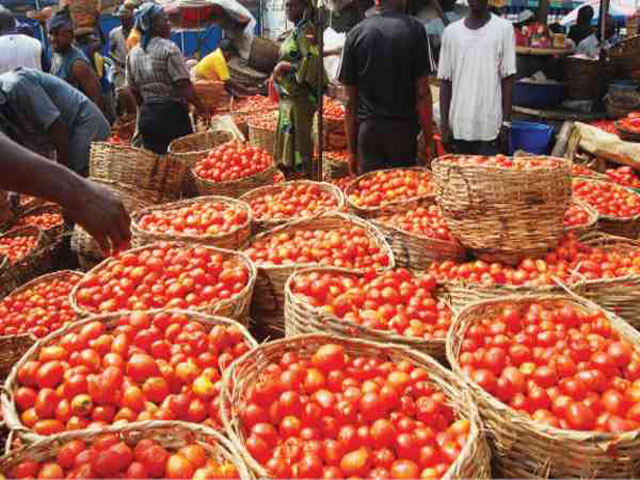
Tomatoes Produce at a Farmers marketBank of Agriculture (BOA) has said it would initiate a N2 billion facility to encourage investment in commercial agriculture and enterprises in Jigawa.

Mr Guyap Waziri, a Director of the Bank, made this known when he spoke at the second plenary of the maiden Jigawa Economic and Investment Summit in Dutse. Waziri said the facility would be provided under a joint collaboration between the bank and Jigawa Government.

He explained that the bank would provide N1 billion while the State Government would contribute same amount to facilitate smooth running of the facility. Waziri said the fund would be made available to investors wishing to invest in agriculture in the state.

"The facility is to encourage investment in commercial and agricultural enterprises at local levels. Agricultural financing is militating against commercial agriculture," he said, The director said the bank had introduced new programmes in line with the policy of the Central Bank of Nigeria.

Market Gains N3.11tn in 5 Months as Demand Lifts Access, GTBank

Trading-session-in-NSE-2105.jpg - Trading-session-in-NSE-2105.jpg
Trading session in NSE
The Nigerian equities market witnessed significant gains last week, closing the five months with a growth of N3.11 trillion. The growth in market capitalisation was 34.6 per cent and represented a significant improvement over the N674 billion or 11 per cent recorded in the corresponding period of 2012.

 An analysis of the market performance in the last five months showed that the Nigerian Stock Exchange (NSE) capitalisation rose from N8.97 trillion to close at N12.08 trillion. About N141 billion gains was recorded last week as institutional investors took position in stocks with half year dividend history. Chiefly among them were GTBank Plc and Access Bank Plc. The two stocks witnessed tremendous price appreciations.

Known for its good corporate governance practice, GTBank, enjoyed impressive buy action from the foreign investors. The high demand for Access Bank and GTBank ahead of the release of their half year unaudited results sustained their recent gain momentum. Access Bank has gained 20.3 per cent in the last five months closing at N11.20 while GTBank has recorded a gain of 15.9 per cent in the same period. Analysts believe the stocks may witness further price rally as investors continue to take positions.

Japanese economic boost for SA


YOKOHAMA, Japan - Various Japanese companies have expressed interest in opening manufacturing plants in South Africa. That’s according to the trade departments of the two countries.

A recent study compiled by the departments shows that more employment is likely to be created in South Africa’s automotive industry, agro-processing and minerals sectors. Japan is South Africa’s third largest export destination, and the fifth largest source of imports.

Already the 110 Japanese companies operating in South Africa have created about 150,000 jobs.
 
The South African government says it will create favourable investment incentives for Japanese companies in the mining, agro-processing and manufacturing sectors.

"Actually investment means jobs. Jobs not only in manufacturing but also services, because manufacturing sectors are very big job multipliers. They create a number of service-related activities and they are the highest multipliers of any other production sector," said Trade and Industry Minister Rob Davies.

The United Nations Development Programme says doing business with a developing country like South Africa may just be the impetus Japan needs to revitalise its economy.

At nearly R20-billion, Japan’s direct investment in South Africa has been steadily growing in recent years. And the continued growth is expected to create more jobs and promote the transfer of skills to South Africa.

The Japanese government says it will urge its companies to invest in the areas of health, education and infrastructure development.

"Focusing on improving infrastructure in Africa that will bring in investment as well as to empower people of Africa, so that human resources will be available when Japanese companies and other companies want to come to Africa," said Japanese government spokesperson Masaru Sato.

Japanese investors' acknowledgement of the continent's economic growth potential, are certainly expected to translate into even greater investment.

-eNCA

Why We Are Investing $500m In Tanzania—Dangote

Aliko-Dangote
Aliko Dangote
The Prime Minister of Tanzania Mizengo Pinda has commended the Dangote Cement Plc and explained why the Africa’s king of cement is investing $500million in his country.

Mr. Pinda who was speaking during the groundbreaking ceremony of the Dangote’s Mtwara Factory in Tanzania said the investment was sequel to invitation of the Dangote Group by his country after it was discovered that Tanzania has the resources it takes to produce cement.

Commending the President of the Dangote Group Aliko Dangote, Mr. Pinda said the new plant will without doubt lift the economy of his country and Africa at large.

He thanked the conglomerate for locating the three million metric tons plant in his country. He said the commencement of the construction of the plant signaled the beginning of a new business relationship between Nigeria and his country.

The Tanzania PM described as an irony, that prior to the coming of Dangote cement, in spite of the abundance of limestone, a necessary raw material in cement manufacture in Mtwara, Tanzania was experiencing a deficit in cement production and supply.

Enforcement of N150,000 ceiling on third party cheques begins today

The Central Bank of Nigeria (CBN) is to begin implementation of maximum ceiling of N150, 000 placed on third party cheques that can be withdrawn by individuals.

With this development any cheque above N150, 000 and which originated from a third party must as from today be lodged into the drawee’s account.
Over the weekend, some banks have started notifying their customers about the development.

Meanwhile, the CBN has extended the coverage of the cashless policy to the Federal Capital Territory, and five states including Kano, Rivers, Abia, Ogun and Anambra as from July 1.

It has directed branches of banks in the affected states to begin an enlightenment of their customers on cashless policy, including the existing limit of cash withdrawals and deposits for individuals and corporate bodies as well as available e-payment option.

The apex bank warned that the cashless policy implementation team will perform spot checks on bank branches in phase two locations to ensure readiness and compliance.

The policy was expected to improve the effectiveness of monetary policy in managing inflation and driving economic growth.

Source: Nigerian Tribune

FBN Holdings Shareholders Get N33bn Dividends

FBN-Holding-0306.jpg - FBN-Holding-0306.jpg
Shareholders of FBN Holdings Plc last week approved the N32.6 billion dividends recommended for the year ended December 31, 2012 and commended the board for the dividend, which came in the first year after the company adopted a holding structure.

The dividends, which translate to 100 kobo per share, represent 25 per cent increase over the 80 kobo paid the previous year. The shareholders expressed satisfaction over the payment of the 100 kobo and urged the bank to sustain the tempo of performance.
 
Speaking at the Annual General Meeting (AGM) held in Lagos, the Chief Executive Officer of FBN Holdings, Bello Maccido, disclosed that the company recorded a profit before tax of N92.7 billion, showing an increase of 158.5 per cent above the N35.8 billion in 2011.
 
Profit after tax, he said, increased by 306 per cent to N75.7 billion, from N18.6 billion in 2011.

FirstBank emerges “Best Bank in West Africa”

FirstBank emerges “Best Bank in West Africa”The celebration of the continent’s brightest financial minds and institutions at the African Banker Awards in Marackech, Morroco last week culminated in the emergence of First Bank of Nigeria Limited as the ‘Best Bank in West Africa. The organizers’ panel of distinguished professionals adjudged FirstBank as the sub-region’s best financial institution in recognition of its consistent performance, quality of its financial products/services, thought leadership status and contribution to the growth and development of the sector in the region.

Publisher of the African Banker, Omar Ben Yedder, said “Given its consistently strong performances in the region’s financial markets, FirstBank is indeed a deserving winner of this prestigious and well deserved recognition. The bank’s pedigree indeed continues to soar not just in Nigeria but indeed the sub-Region.”FirstBank has recently been the recipient of several awards including ‘Best Bank Brand in Nigeria’ (The Banker Magazine); Best Retail Bank in Nigeria (Asian Banker) and Best Bank in Nigeria (Global Finance) as it continues to drive innovation and financial solutions that speak to the needs of various customer segments.

AMCON Reviews Agents’ Agreements for Securities Lending

2108F02.Mustapha-Chike-Obi.jpg - 2108F02.Mustapha-Chike-Obi.jpg
Mustapha Chike-Obi
Securities lending will soon take root in the Nigerian capital market as prospective lenders and appointed securities lending agents are reviewing their agreements and proposals expected to facilitate the process.

Securities lending, which is the act of loaning a stock, derivative, other securities to an investor or firm is an integral part of the market making programme, which the Nigerian Stock Exchange (NSE) rolled out in September 2012.
 
When the market making programme started, the Securities and Exchange Commission (SEC) registered Stanbic IBTC Bank Plc, United Bank of Africa Plc, First Bank Plc and Capital Bancorp Plc as securities lending agents(SLA). But the securities lending has not been taking place due to some outstanding issues.

S&P Upgrades Access Bank's Credit Rating

Standard-and-Poor-2807.jpg - Standard-and-Poor-2807.jpgA foremost global ratings agency, Standard & Poor’s Rating Services (S&P), has upgraded Access Bank’s long-term credit rating to ‘BB-‘from ‘B+’ with a stable outlook.

Similarly, the bank’s long term Nigeria national scale rating was upgraded to ‘ngAA-‘ from ‘ngA’, attesting to its continued adherence to global best practices, sound corporate governance and best-in-class risk management framework.

 The development is impressive given Access Bank’s stability, which insulated it from the gale of rating downgrade witnessed by some of the world’s largest banks last year.

This is the second consecutive upgrade the bank has received in two years and attests to its resilience and its importance to the Nigerian financial system and economy.

FG Confirms Massive Dumping of Crude Palm Oil on Nigeria

0412F02.Akinwumi-Adesina.jpg - 0412F02.Akinwumi-Adesina.jpg
Minister of Agriculture and Rural Development Dr. Akinwumi Adesina
The Federal Government has confirmed the illegal flooding of Nigeria’s market with large volumes of crude palm oil (CPO) import from neighbouring West African nations, under the guise of the ECOWAS Trade Liberalisation Scheme (ETLS).

The ETLS is a regional trade facilitation agreement endorsed by nations under ECOWAS and it is designed to boost trade among them by allowing reciprocal, duty free importation of goods and services within the West African countries. However, the goods and services entitled to move duty-free within the region must be indigenous to the exporting nation and must fully originate from there.
Minister of Agriculture and Rural Development Dr. Akinwumi Adesina, noted at the weekend that available statistics strongly suggests that in the closest West African nations to Nigeria, most of the palm oil they import from Malaysia, Indonesia, Singapore and others actually end up in the Nigerian market duty-free; thereby displacing locally produced palm oil from the market and suffocating the Nigerian oil palm plantations.

UBS plans Africa expansion to target continent’s wealthiest

The logo of Swiss banking giant UBS is seen on Oct. 13 in Zurich. The bank could announce layoffs of 10,000 employees this week at its earnings release on Oct. 30. Fabrice Coffrini/AFP/Getty ImagesSwiss bank, UBS, is planning to expand its Africa operations as growth rates exceed 5% and boost demand for banking services for the continent’s high earners.

The bank seeks to increase profits by tapping into the need for wealth management and targeting African entrepreneurs and high-net-worth individuals who have at least $3m to invest.

“Wealth management is key to the Africa franchise,” Sean Bennett, the Johannesburg-based managing director of UBS in sub-Saharan Africa, told Bloomberg yesterday.

“That’s what we lead with. We want to increase our physical presence before year-end and then do more in the next few years,” he said.

Bennett said the bank has hardly touched the tip of the iceberg when it comes to providing banking services to Africa’s wealthiest.

“When countries grow at 7%, that’s a lot of people starting to make serious money,” Bennett said.
Nigerian growth is expected at 7.2% this year, according to the International Monetary Fund, while the organization said in April that Ivory Coast and Mozambique will both expand by 8% next year, the fastest pace in the region.

The bank did not comment where in Africa it plans to expand, but hopes to seek out the ‘hidden billionaires’ looking for somewhere to put their wealth.

Bennett said with UBS mostly catering to people who are already high profile, there is scope for growth among the hidden billionaires.

The bank currently has a presence in South Africa, and seven Middle Eastern countries.

Source: AfricaAM

Sunday, 2 June 2013

Bonga: 19 new oil wells may gulp N1.96tn

Oil platform
Oil platform
credits: en.wikipedia.org
Indications emerged on Friday that Shell Nigeria Exploration and Production Company Limited will spend $12.35bn (about N1.96tn) on the planned drilling of 19 new oil wells as part of the expansion of Bonga deep water oil field.
 
A deep water oil well project, it was learnt, would cost $150m (N23.7bn), with further appraisal cost put at $500m (N79bn).
 
Bonga was Nigeria’s first deep water oil discovery in 2005 and has the capacity to produce more than 250,000 barrels of oil a day and 150 million cubic feet of gas a day. At the end of 2012, Bonga had produced about 450 million barrels of oil.
 
The Commercial Integration and Business Value Manager, Shell Nigeria, Mr. Taaj Shobayo, also confirmed that about $650m (N102.8bn) was required for each deep water exploration and production.

ThistlePraxis Brings African Youngest Billionaire Ashish Thakkar to Nigeria

020613F2.Ashish-Thakkar.jpg - 020613F2.Ashish-Thakkar.jpg
Ashish Thakkar
Ashish Thakkar’s life story reads like a fairy tale. Born in 1983, Ashish Thakkar’s family fled genocide-torn Rwanda for Uganda, and once there, the young Ashish caught the entrepreneaurial spirit.

Setting up a computer selling business as a high school student, Ashish supplied computers to his friends, school mates and school and soon went full blast into business, though his parents had warned that it was back to school, if the business thing did nt work out. But it did work and now, years later, Ashish is not just at the head of a global business conglomerate, he employs over 5,000 people across Africa, sits on the African Council of the World Economic Forum and has been named Africa’s Youngest Billionaire by Forbes Magazine.
 
This June, Ashsish Thakkar will be in Nigeria, as guest of wave-making consulting firm, Thistle Praxis. Ashish will be the keynote speaker at the 3rd edition of ThistlePraxis‘ African CEO Roundtable on Corporate Sustainability and Responsibility, which will take place in Tinapa from June 20-21. Ini Onuk is Lead Consultant/CEO at ThistlePraxis, convener of the African CEO Roundtable on Corporate Sustainability and Responsibility. She is engaging, passionate about CSR and fixated with leadership as the fulcrum of sustainable growth, innovation and positve change. This apostle of corporate sustainability spoke about why they are bringing the young billionaire to Nigeria and why transformational leadership exhibited by people like Thakkar is essential for corporate growth and sustainability.