Thursday, 11 July 2013

Flipkart set to mop up record $300 million

BANGALORE: Online retailer Flipkart has lined up funding worth about $300 million, which will take the loss-making e-commerce poster boy through to an initial public offering (IPO), possibly in the next 24 months, people directly briefed on the matter said.

 Flipkart on Wednesday announced that it had secured $200 million from existing investors, including US hedge fund Tiger Global, South Africa's Naspers and venture capitalist Accel Partners.

The Bangalore-based company is also on course to mop up another tranche of $100 million from new investors even as the latest fund-raising valued the e-tailer at $1.5 billion, sources said. Tiger and Naspers have poured in almost $170 million, taking their combined stake in Flipkart to over 50%. Accel, which seeded the start-up, and San Francisco-based family office Iconiq Capital have brought in the remaining $30 million. Flipkart is sitting on offers from middle-east sovereign investors and global pension funds to raise the additional $100 million. With this, Flipkart would have raised almost half a billion dollars, probably the biggest funding received for an Indian start-up venture till date.

Land Of Opportunity: How America’s Wealthiest Universities Are Investing In Nigeria, Kenya

OPPORTUNITY_AFRICAAmerica’s wealthiest universities are venturing into Africa’s fast-growing frontier markets in search of outsized investment returns that will allow them to offer scholarships, lure star professors and fund research.

For Sub-Saharan Africa, recognition from these deep-pocketed U.S. institutions, who have often earned envy among fellow global investors for their strong returns, marks a significant shift.
American university endowments – permanent funds of educational institutions – pride themselves on spotting new investment opportunities early, such as venture capital, private equity and natural resources such as timber. Combined, they manage assets of over $400 billion.

A study of 831 endowments by the Commonfund Institute and the National Association of College and University Business Officers published this year showed their annual net returns in the 10 years to June 30, 2012, averaged 6.2 percent.

Wednesday, 10 July 2013

Sanusi: Biometric Authentication of ATMs, PoS to Commence in 2015

1606N.-Lamido-Sanusi.jpg - 1606N.-Lamido-Sanusi.jpg
Mallam Sanusi Lamido Sanusi
The Governor of the Central Bank of Nigeria (CBN), Mallam Sanusi Lamido Sanusi Tuesday declared that the biometric authentication of Point of Sales (PoS) terminals and Automated Teller Machines (ATMs) will commence in 2015.

He said the move was aimed at addressing concerns over the safety of customers’ funds and also to avoid losses through compromise of Personal Identification Number (PIN).
 
Speaking in Abuja at the opening of a stakeholders' meeting on cashless policy, Sanusi said the CBN had taken concrete steps to regain the confidence of ATM consumers by ordering the migration from Magstripe debit cards to Chip and Pin (EMV compliance) debit cards.
 
"Statistics show that this effort has reduced the fraud incidences by 90 per cent. Many customers are now embracing these of electronic (ATM and POS) channels in their transactions because of near impossible efforts of would be fraudsters in being able to clone debit cards to perpetrate fraud as it was the case during the pre-migration era," he said.

StarTimes Investment In Nigeria Hits N20b

NTA Star TV Network (StarTimes) has said it has invested N20 billion so far in Nigeria since it commenced operations three years ago in the country.

StarTimes Director Mr. Maxwell Loko disclosed this in Abuja yesterday while addressing journalists ahead of the company’s third anniversary coming up in August.

He disclosed that the investment which was just N15 billion in January has since increased with N5 billion within the last six months.

He admitted that the venture was quite capital intensive and asserted that profit cannot be made in the short run since they were still expanding to the different states.

“At the moment, we are still on the learning curve and therefore investing more than we are earning. We are currently in 16 major cites, but before the end of this year, Startimes will be in all the state capitals of the 36 states and other cities,” Mr Loko said.

He added that to reward their subscribers, StarTimes will be given out N14 million in cash and product to new and existing subscribers.

Nigeria Loses Over N735m Daily To Gas Flaring - Official

The Department of Petroleum Resources (DPR) says Nigeria is losing over 4.9 million dollars (more than N735 million) daily to gas flaring.

Mr George Osahon, a Director in DPR, made the disclosure at the 14th Business Forum of the Nigerian Gas Association (NGA) on Tuesday in Lagos.

Osahon said that in spite the country’s massive hydrocarbon endowment, Nigeria was yet to fully benefit from the resources.

According to him, Nigeria gas reserves endowment is up to 600 Trillion Cubic Feet (TCF), hence the country is often described as large gas haven with little oil.

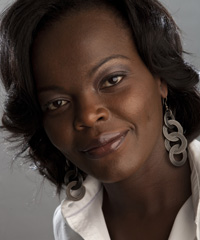
Television entrepreneur, Dorothy Ghettuba, explains how she got to where she is today

Four years ago Dorothy Ghettuba quit her job at a venture capital firm in Canada and moved back to Kenya to follow her passion for TV production. With no education or experience in the field, the only thing Ghettuba was armed with was her determination to make it.

“There was no plan B. When I was packing up my stuff and leaving a good job, and leaving a comfortable life in a place where people have first world problems of ‘can I have the strawberry or the vanilla one’… failure was not an option,” she said.

Dorothy Ghettuba is the founder and CEO of Spielworks Media.
Dorothy Ghettuba is the founder and CEO
of Spielworks Media
Ghettuba is the founder and CEO of Spielworks Media, one of Kenya’s leading production houses. Some of its TV shows include Block D, Lies that Bind, Higher Learning, Saints, Ladies 1st and civic education drama series Know Your Constitution, which have aired on TV stations both in Kenya and outside the country.

Ghettuba told How we made it in Africa that she has always had a passion for acting but could not pursue it as a career after high school because it was not financially sustainable. She went on to study communications and political science at Andrews University in Michigan, United States.

When she visited Kenya for a friend’s wedding, Ghettuba was amazed by how a local TV station had risen from the bottom to become the most popular station because it aired local content. “I saw an opportunity to create quality content,” said Ghettuba, who is also an actor, singer and writer for film and television.

Africa: U.S. Can Invest in Africa On Bipartisan Basis

President Barack Obama's recent visit to Senegal, South Africa and Tanzania was written off as a "guilt trip" by some and a "last chance" to salvage an Africa policy legacy by others.
In fact, the initiatives that he introduced during the trip have the potential to be as transformative, if not more so, than those developed by his predecessors, presidents Bill Clinton and George W. Bush.
True, there was frustration on the continent and in some U.S. policy circles that Obama did not pay more attention to the continent during his first term, frustration which I shared. His 2009 visit to only one country, Ghana, for less than 24 hours diminished expectations and conveyed a sense of detachment.

Emphasizing Trade and Investment
Nevertheless, the president has put in place a number of initiatives that have the potential to reorient U.S. policy on the continent. Chief among them is Power Africa, which is designed to add 10,000 megawatts of cleaner, more efficient electricity to an estimated 20 million homes and businesses in six countries over the next five years. The United States will commit U.S.$7 billion in financial support, and companies such as General Electric, Symbion Power and the African Finance Corporation have pledged more than $9 billion to support the development of at least 8,000 megawatts of new electricity.

Hafeez: Eurobond Market Now Lucrative for Nigerian Banks

Omar-Hafeez.jpg - Omar-Hafeez.jpg
Omar Hafeez
The Managing Director/Chief Executive Officer, Citibank Nigeria Limited, Mr. Omar Hafeez, has revealed that the growing demand for long-term funds by a lot of corporate organisations in the country is a major factor that had led to the rising appetite for the issuance of Eurobonds by Nigerian banks. He also told Obinna Chima and Nume Horsfall that there are several opportunities for banks to lend long-term funds in the Nigerian economy. Excerpts:

You sit at the top of a subsidiary of an international bank; from your vantage position, can you say the global financial crisis has been resolved?
I think that we are still in the realm of recovery phase. I don’t think one can say everything is behind us. I would say that the United States is further up the chart in terms of recovery and therefore the statements on the quantitative easing that came out recently. I think that the US is further up the curve. I think Europe is still catching up. So I wouldn’t say it is behind us; I would say we are still in the recovery phase.

For, Nigeria, I think the issue was tackled quickly through the creation of the Asset Management Corporation of Nigeria (AMCON) and the actions of the Central Bank of Nigeria (CBN), which took the problems out of the financial sector and has therefore primed the financial sector to facilitate the growth of the economy.

CBN sets 2015 deadline for removal of COT

CBN Governor, Mallam Sanusi Lamido Sanusi
As part of efforts to reduce banking transaction costs, the Central Bank of Nigeria (CBN), yesterday, disclosed that commercial banks will no more charge Commission On Transaction (COT) by 2015.
The apex banking regulator also hinted that banks will soon deploy biometric options to deepen the Know Your Customer (KYC) principles and also curb incidence of fraud.

Speaking during a sensitisation workshop for stakeholders on the cashless economy recently extended in six states including Abia, Anambra, Kano, Rivers, Ogun and the Federal Capital Territory (FCT) on July 1, Mr Eme Eleonu who represented the Head, Shared Services Department of CBN, Mr Chudi Omeafu, said that with the introduction of cashless policy in Lagos, cost of distributing cash is decreasing.

He said that beside the reduction in cost, cashless policy will help to modernise payment system; help financial inclusion strategy; allow people to save money and will reduce the rate of insecurity as well as curb corruptions and leakages.

CBN tasks SMEs on N200 billion finance scheme

Naijaparrot.comTHE Central Bank of Nigeria (CBN) has reiterated its support towards the development of the real sector, especially the Small and Medium Scale Enterprises (SMEs), urging them to embrace the N200 billion SMEs Guarantee Scheme Fund.

CBN’s Head of SMEs Finance, Dr. J. Abba, who disclosed this in Lagos at the weekend, said the Apex bank has positioned itself to bridge the gap in access to finance among growing enterprises.
Abba informed that the CBN has intervened significantly in the real sector to the tunes of several billions of naira, which were aimed at jump starting the Nigerian economy and making it competitive globally.

Already, the CBN’s Head of SMEs Finance said there is a N200 billion fund at seven per cent interest rate and 15-year tenure, which was introduced into the market about four years ago, stressing that the scheme is still accessible.

Abba said from the N200 billion, 535 companies have benefitted, 86 per cent of which were from the South West.

Tuesday, 9 July 2013

Fitch Affirms 8 Nigerian Banks; Downgrades 1

(The following statement was released by the rating agency) LONDON, July 08 (Fitch)

Fitch Ratings has affirmed the Long-term Issuer Default Ratings (IDR) of Zenith Bank Plc (Zenith), First Bank of Nigeria Ltd (FBN), United Bank for Africa Plc (UBA), Guaranty Trust Bank Plc (GTB), Access Bank Plc (Access), Diamond Bank Plc (Diamond), Fidelity Bank Plc (Fidelity) and the Long-term National Ratings of Stanbic IBTC Bank Plc (SIBTC).

Simultaneously, the agency has downgraded Union Bank Plc's (Union) Long-term IDR due to a change in Fitch's opinion of the bank's systemic importance relative to peers. Union's Support Rating Floor (SRF) has been revised to 'B' from 'B+' due to its perceived lower systemic importance post restructuring. As a consequence, the bank's Long-term IDR has been downgraded to 'B' from 'B+' and its National Rating to 'BBB+(nga)' from 'A+(nga)'. At the same time, Union's Viability Rating (VR) has been upgraded to 'b-' from 'ccc' due to its improved financial position with on-going restructuring. Access's VR has been upgraded to 'b' from 'b-' given its larger franchise, improving performance and commitment to maintaining healthy Fitch core capital (FCC) ratios over the medium term and despite its high cost to income ratio as it integrates a large acquisition. As a consequence, the bank's Long-term IDR is now driven by its VR of 'b' rather than its SRF of 'B'.

A full list of rating actions is at the end of this rating action commentary.

NSE’s market capitalisation depreciates by N44b

DESPITE price gains that outweighed losses, transactions on the Nigerian Stock Exchange (NSE) closed on a downward note yesterday, following price losses suffered by major bluechip companies, as market capitalization slide marginally by N44 billion.

Volume of shares traded also dropped marginally, as investors exchanged 188.546 million shares worth N2.148 billion changed hands in 4085 deals against 424.416 million shares worth N3.538 billion made the previous day in 5081 deals.
                                   
Specifically, at the close of transactions yesterday, the All/ Share index decreased by 136.99 basis points from 36,926.29 points recorded on Friday to 36789.30 yesterday while market capitalisation of listed equities dropped by N44 billion or 0.37 per cent to N11.650 trillion from N11.694 trillion traded on Friday.
                                              
Further analysis of yesterday’s trading showed that Nestle Nigeria Plc topped the losers chart, shedding N6.00 to close at N994.00 while Nigerian Breweries followed with a loss of N2.70 kobo to close at N160.30 kobo Cadbury shed N1.57 kobo to close at N54.53 kobo.
     

Foreign Investors behind Nigeria’s capital market recovery – NSE boss

Nigerian Stock Exchange
WorldStage Newsonline-- The bullish run in the Nigeria’s capital market in the last six months has been driven by foreign investors, according to the Chief Executive Officer (CEO) of the Nigerian Stock Exchange (NSE), Oscar Onyema.
 
Speaking at an interactive forum on the use and distribution of TNSE Market Data in Lagos, he said: “I want to point out one thing, the recovery you are seeing in the market today is driven by foreign investors, let’s not make any mistake about that.
 
"They know it goes up and down, we had to go to them to explain what we are doing in order to bring confidence back from their side."
 
He further said the NSE had meetings with the Pension Fund Administrators (PFAs), insurance companies and that “last year alone, we had over 200 investors’ education programmes.”
 
At the end of year 2012, Nigeria’s Securities and Exchange Commission (SEC), had that foreign investors contributed about 70 per cent of daily trading value of equities at the Nigerian Bourse, while retail investors contributed 30 per cent.

Monday, 8 July 2013

Insight - Africa makes the grade for richest U.S. university investors

(Reuters) - America's wealthiest universities are venturing into Africa's fast-growing frontier markets in search of outsized investment returns that will allow them to offer scholarships, lure star professors and fund research.

An undocumented UCLA student attends a graduation ceremony for UCLA ''Dreamers'' or Dream Act students at a church near the campus in Los Angeles, California June 15, 2012. REUTERS/Jonathan Alcorn
An undocumented UCLA student attends a graduation ceremony for UCLA ''Dreamers'' or Dream Act students at a church near the campus in Los Angeles, California June 15, 2012.
Credit: Reuters/Jonathan Alcorn

For Sub-Saharan Africa, recognition from these deep-pocketed U.S. institutions, who have often earned envy among fellow global investors for their strong returns, marks a significant shift.

American university endowments - permanent funds of educational institutions - pride themselves on spotting new investment opportunities early, such as venture capital, private equity and natural resources such as timber. Combined, they manage assets of over $400 billion.

A study of 831 endowments by the Commonfund Institute and the National Association of College and University Business Officers published this year showed their annual net returns in the 10 years to June 30, 2012, averaged 6.2 percent.

In the same 10-year period, returns for the U.S. S&P 500 stock index were 5.3 percent.

Obama’s Opportunity to Improve U.S. Investment in Africa

Which continent is home to six of the world’s 10 fastest-growing economies and is projected to grow by 5 percent in 2013, more than twice the U.S. rate? And which one gets only 1 percent of U.S. foreign direct investment?

Obama and Africa
Illustration by Bloomberg View

The answer, of course, is Africa, from which PresidentBarack Obama returned last week after a six-day trip. His visit focused much-needed attention on the uneven state of African development -- and the U.S.’s lack of a strategy to engage the continent economically.

The U.S. should be doing more, not just to reap the benefits of increased exports, more jobs and higher growth at home, but to improve the quality of African lives as well.

If that’s not reason enough, there is the geopolitical rationale: As of last year, China had poured more than $40 billion into Africa and has pledged $20 billion in foreign aidover the next three years. In 2009, China overtook the U.S. as Africa’s largest trading partner. Trade between China and Africa totaled $166 billion in 2011, compared with the U.S.’s $95 billion trade with Africa. China has more than 150 commercial attaches in sub-Saharan Africa. The U.S. has six.

Engaging Africa

Banks’ credit to private sector hits N15.5trn in May 2013

Naijaparrot.comNet loans from Nigeria’s banking system to the private sector increased as at May 2013 by just 0.5 per cent to N15.5 trillion (US$96.8bn). The Central Bank of Nigeria Economic review for the month of May 2013 shows that year on year, the net loans to the organized private sector was 7.0 per cent, with the deposit money banks accounting for about 70 per cent of this figure while the Central Bank of Nigeria (CBN) made up the balance, mostly in the form of Asset Management Company (AMCON) bonds which were to be refinanced.
 
Meanwhile, the flow of credit from deposit money banks (DMBs) to the private sector increased to N15.408 trillion year-on-year as of April 2013.

The amount represented an improvement of 0.95 per cent or N146 billion, compared to the N15.262 trillion recorded in March as aggregate domestic credit (net), according to the CBN, grew by 17.46 per cent in April 2013.

This, it said, annualised to a growth rate of 52.38 per cent over the end-December 2012 level, compared to the contraction of 6.12 per cent recorded in the corresponding period of 2012.

But the Central Bank’s Money and Credit statistics showed that narrow money (M1), which includes all physical monies such as coins and currency along with demand deposits and other assets held by the apex bank, decreased to N6.764 trillion in April, as against the N6.854 trillion it attained in March.

However, the broad money (M2), which generally is made up of demand deposits at commercial banks and monies held in easily accessible accounts climbed to N15.623 trillion in April, from N15.585 trillion in March.

According to the bank, when annualised, M2 grew by 13.3 per cent, compared to the contraction of 0.03 per cent in the corresponding period of 2012. The growth in M2 was slightly below the growth benchmark of 15.2 per cent for 2013.

Source: The Sun

Fraudsters invade banks’ online platform, rip off customers

ACTIVITIES of fraudsters on banks’ online platform have assumed an alarming rate, as unsuspecting members of the banking public are being fleeced of their hard-earned funds, thereby threatening the cashless policy introduced last year to encourage electronic payment system.

Investigations by the Nigerian Tribune showed that the worst hit banks were those that recently migrated to another platform and others experiencing hiccups in their online platforms.

The electronic fraudsters hack into banks’ platform and send mails to all the bank’s customers soliciting them to update their account, in view of a new security enhancement.

The fraudsters will post an online verification form where the customers are made to disclose all necessary information, including Personal Identification Numbers (PIN) and other details.

CBN sets up N200bn microfinance fund

REPRIEVE is coming the way of microfinance banks (MFBs) and small businesses in the country, as the Central Bank of Nigeria (CBN) has established N200 billion Micro, Small and Medium Enterprises (MSMEs) Development to provide liquidity support.

Speaking with the Nigerian Tribune at the sidelines of the CBN organised seminar for finance correspondents and business editors in Umuahia, Abia State, at the weekend, a top official of the apex bank, who craved anonymity, said the CBN governor, Mallam Lamido Sanusi, had given the nod to launch the fund, at the microfinance conference scheduled for Abuja in August.

Confirming the development, the Director, Other Financial Institutions Development (OFID) department of the CBN, Mr Olufemi Fabanwo, said the fund was not to bail out MFBs, stating that it was meant to assist them overcome temporary liquidity challenges.

He noted that to access the fund, the affected MFB must be carrying low Non-Performing Loan (NPLs) in its books and must show ability to pay back the loans on the agreed terms.

Meanwhile, the banking watchdog has stated its determination to meet its target of attracting most Nigerians to the financial landscape, through the financial inclusion strategy.

According to Director, Development Finance Department, CBN, Mr Paul Eluhaiwe, a financial inclusion secretariat had been set up in the CBN to coordinate stakeholder activities towards increasing financial inclusion, collect and analyse financial inclusion data, track and monitor progress on financial inclusion and address capacity building initiatives.

Source: Nigerian Tribune

Sunday, 7 July 2013

Power Sector: Are Nigerians Running Out of Patience?

In what looks like a season of excuses, the Minister of Power, Professor Chinedu Nebo, has in the past one month been reeling out reasons for the appalling state of power delivery in the country as members of the nation’s business community continue to count losses incurred through the adoption of alternative power generation, reports Festus Akanbi
260513F.Chinedu-Nebo.jpg - 260513F.Chinedu-Nebo.jpg
Prof Chinedu Nebo, Power Minister

An attempt to seek the opinions of some members of the Nigerian business community last week on the present state of power provoked a combination of indignation, frustration and disillusion.
Most of the respondents to THISDAY’s enquiries were particularly frustrated with a system, which, in spite of huge resources expended so far, and government assurances, has failed to improve the state of power delivery to homes and offices in the country.

This development is coming on the heels of a shocking revelation from the power ministry that of Nigeria’s 160 million population, only 40 million have access to electricity through the public power supply system.
 
The Minister of State for Power, Hajiya Zainab Ibrahim Kuchi, who made the disclosure last month, said “Privatisation is at its conclusion stage come July; what we need to focus on is the commercialisation of the power sector, considering where we are and the fact that we are only giving power to only 40 million. We have 160 million Nigerians now and we are only giving power to 40 million of that population.”

Obama's Africa Investment is Smart Strategy With a Side Of Sneaky Dealing

obamas, africa, investment, is, smart, strategy, with, a, side, of, sneaky, dealing,
Obama's Africa Investment is Smart Strategy
With a Side Of Sneaky Dealing
President Obama’s recently announced $7 billion "Power Africa" investment follows a long tradition of presidential offerings to the continent, including Clinton’s African Growth and Opportunity Act (AGOA) and Bush’s Emergency Plan for AIDS Relief (PEPFAR). Obama’s plan to create a desperately needed electrical grid infrastructure for Sub-Saharan African nations is a far more practical strategy that will significantly affect quality of life, flourishing industries, and future partnerships in the continent.

Some Americans would prefer to see the money spent domestically, on scientific research, education reform, health care, or even our own infrastructure. But investments in Africa don’t fall into an either/or with our domestic budget — it’s in our long-term interests to forge partnerships in the region that can lead to economic trade, resources, military stability, etc.